
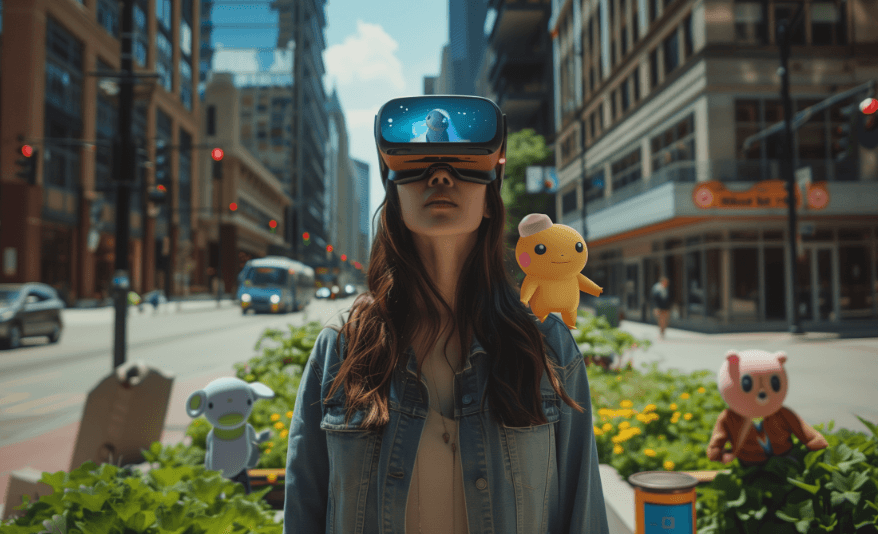
The distinction between Augmented Reality (AR) and Virtual Reality (VR) is pivotal in understanding their unique roles in technology. AR enhances the real world with digital overlays, while VR immerses users in entirely artificial environments. Each technology serves different purposes and applications, yet their impact on various fields is profound. Exploring these differences reveals the transformative potential of both AR and VR, paving the way for innovations that could redefine our interactions with digital content. What lies ahead in this evolving landscape?
Defining Augmented Reality and Virtual Reality
In the evolving landscape of digital technology, augmented reality (AR) and virtual reality (VR) stand out as transformative innovations.
AR enhances real world integration by overlaying digital elements onto physical environments, offering users immersive experiences that blend reality with virtual enhancements.
Conversely, VR creates entirely virtual realms, immersing users in computer-generated worlds, thereby reshaping interactions and perceptions of reality in unprecedented ways.
See also: Top Cybersecurity Trends You Need to Know in 2025
Key Differences Between AR and VR
Augmented reality and virtual reality, while both contributing to immersive digital experiences, fundamentally differ in their approach and application.
AR enhances the user experience by overlaying digital information onto the real world, fostering seamless technology integration.
In contrast, VR creates entirely immersive environments, isolating users from reality.
These distinctions highlight the unique capabilities and potential applications of each technology in enhancing human interaction with digital content.
Applications of Augmented Reality
As industries continue to innovate, the applications of augmented reality (AR) are becoming increasingly diverse, transforming how individuals interact with their environments.
AR enhances gaming experiences by merging digital elements with the real world, providing immersive gameplay.
Additionally, it serves as powerful educational tools, allowing learners to visualize complex concepts and engage interactively, ultimately fostering a more enriched and liberated learning experience.
Applications of Virtual Reality
Virtual reality (VR) captivates users by immersing them in entirely simulated environments, offering transformative applications across various sectors.
Notably, VR enhances gaming experiences, allowing players to engage in lifelike adventures.
Additionally, it serves as an effective tool for training simulations, enabling professionals to practice skills in risk-free settings.
These applications highlight VR’s potential to revolutionize entertainment and education, fostering creativity and innovation.
Conclusion
In a world where reality seems increasingly insufficient, augmented and virtual realities offer tantalizing escapes—one simply sprinkles digital fairy dust over the mundane, while the other catapults users into realms where even their wildest dreams (or nightmares) can become tangible. As humanity grapples with the age-old question of “What’s real?” it may be wise to remember that whether one is enhancing reality or escaping it, the only true constant is the inevitable need to charge one’s device.




 Understanding Big Data: How It’s Changing the Business Landscape